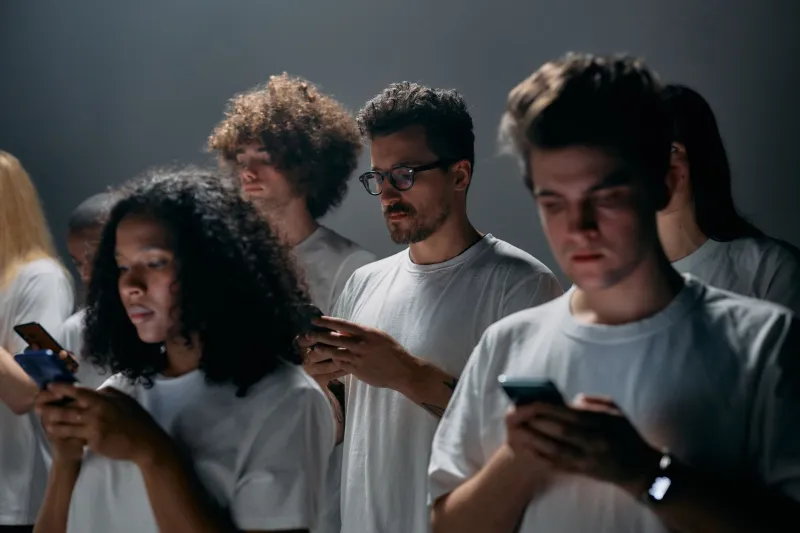
The Surprise Is Gone: How We Broke Entertainment's Most Powerful Trick
Remember the last time a movie genuinely shocked you? Not the jumpscare kind — the other kind. The plot development you never saw coming. The character death that made the whole theater go silent. The ending that rewired how you understood everything that came before it.
If you're struggling to come up with a recent example, you're not alone. And the reason probably isn't that storytellers have gotten worse. It's that the infrastructure around storytelling has made genuine surprise almost architecturally impossible.
How We Got Here
Surprise used to be protected by logistics. If you hadn't seen the movie yet, you simply didn't know what happened — because finding out required either seeing it or talking to someone who did. The window of surprise was wide, and cultural conversations mostly happened after the experience, not before.
Then the internet collapsed that window to almost nothing.
Now, the lifecycle of a major entertainment release looks something like this: production leaks surface on Reddit months before release. Trailers drop with carefully embedded hints that dedicated fan accounts dissect frame by frame. Early screener reviews hit aggregator sites with spoiler-tagged paragraphs that half the audience will click on anyway. And then, in the forty-eight hours after release, social media floods with reaction content, clip compilations, and hot takes that reveal every major plot beat to anyone who wasn't fast enough.
By the time you actually sit down to watch something, you've already been briefed.
The Marketing Machine's Role
Here's the part the studios don't talk about: a significant portion of the spoiler problem is self-inflicted. Modern entertainment marketing has become so data-driven and engagement-obsessed that it routinely reveals too much in the name of generating buzz.
Trailers now routinely include scenes from the third act. Promotional interviews have actors confirming or denying plot points that audiences haven't seen yet. "Reaction bait" marketing — designed specifically to generate viral outrage or excitement — often requires revealing the thing that's supposed to be a surprise.
The logic is short-term: reveal a shocking moment to drive opening-weekend clicks, even if it destroys the experience for the people who see those clips before they see the film. The algorithm rewards the engagement spike. The audience pays the cost.
Fan Theories and the Spoiler Industrial Complex
Then there's the fan community dimension, which is thornier because it comes from a place of genuine love.
For major franchises — Marvel, Star Wars, prestige TV dramas, horror franchises with established rules — there are entire ecosystems of fans whose hobby is predicting what happens next. These communities are smart, dedicated, and often right. When a beloved show's plot can be reverse-engineered from casting announcements, shooting location leaks, and production schedule changes, the detectives will find it.
And once the theory is out there, confirmed or not, it changes the experience. Even if you're consciously avoiding spoilers, you've probably absorbed enough ambient information to make the big moment feel less like a revelation and more like a confirmation.
The irony is brutal: the most passionate fans — the ones who care most about a story — are often the ones who've most thoroughly preemptively consumed it.
The New Spoiler Avoidance Subculture
A growing segment of American audiences has responded to this with increasingly extreme countermeasures. Full social media blackouts in the days before a major release. Browser extensions that automatically blur entertainment news. Group chats with strict no-spoiler rules enforced with genuine social consequences. Some people are going as far as booking tickets for midnight releases specifically to experience something before the internet has time to process it.
This is a lot of work to do something that used to be automatic: just not knowing what happens.
The fact that avoiding spoilers now requires active, ongoing effort says something significant about how fundamentally the information environment has shifted. Ignorance — in the best, most delicious sense of the word — used to be the default state. Now it's a discipline.
What Surprise Actually Does
It's worth pausing on why this matters beyond personal preference. Surprise isn't just a fun bonus in storytelling. It's one of the primary mechanisms through which narrative creates meaning.
When a story genuinely catches you off guard, your brain does something interesting: it goes back and reinterprets everything that came before. The surprise recontextualizes the experience. That retroactive shift — that "oh, everything means something different now" feeling — is one of the deepest things narrative art can do to a person.
When you already know the twist, you don't get the recontextualization. You get the confirmation. It's a fundamentally different, and shallower, experience. You're watching for craft rather than being transported by story. Which is fine — but it's not the same thing, and pretending otherwise is a form of collective denial.
Can Surprise Be Saved?
Some creators are trying. A handful of high-profile releases in recent years have gone to extreme lengths to protect their surprises — fake script distributions, limited screener access, strict embargo enforcement, even misdirection campaigns that deliberately plant false information.
Others have taken the opposite approach: leaning into the spoiler culture by making the conversation around a work part of the work itself. When you know the plot going in, the experience becomes about execution and craft rather than revelation. It's a legitimate artistic choice. But it's also a concession.
The honest answer is that surprise, as a structural feature of mass entertainment, is probably not coming back in the form it once existed. The information environment is too fast, too porous, and too incentivized to reward reveals over restraint.
What might survive is something smaller and more precious: the surprise you protect for yourself. The deliberate choice to stay offline, skip the discourse, and walk into something without a map. It requires effort now. But maybe that effort is what makes it worth it.