A Thousand Cultures, No Crossover: What Happens When Everyone Lives in a Different Pop Moment
There used to be a test you could run on Monday morning. Walk into any office, any school cafeteria, any diner in America and ask: did you watch it last night? And enough of the time, people knew what "it" was without you having to specify. The finale. The game. The sketch. The moment.
That test doesn't work anymore. And it's not just because appointment television has fragmented. It's because the entire concept of a shared cultural moment — something millions of people experienced simultaneously, something you could reference without footnotes — is eroding in ways that are faster and stranger than most of us have processed.
Welcome to the Micro-Universe
Here's what the current entertainment landscape actually looks like from the inside: a vast, parallel-running collection of hyper-specific communities, each generating its own references, its own stars, its own moments of collective excitement — almost entirely invisible to everyone outside them.
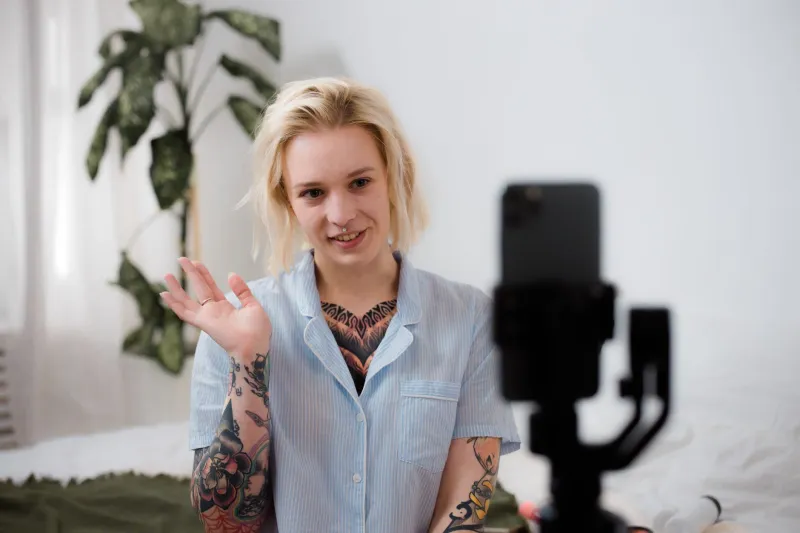
There are TikTok subcultures so specific they've developed their own slang, their own aesthetic grammar, their own version of celebrity that means nothing to someone three algorithmic degrees away. There are Discord servers with tens of thousands of members organized around a single creator's content, functioning as fully realized social ecosystems — inside jokes, running narratives, community drama — that produce zero crossover into broader culture.
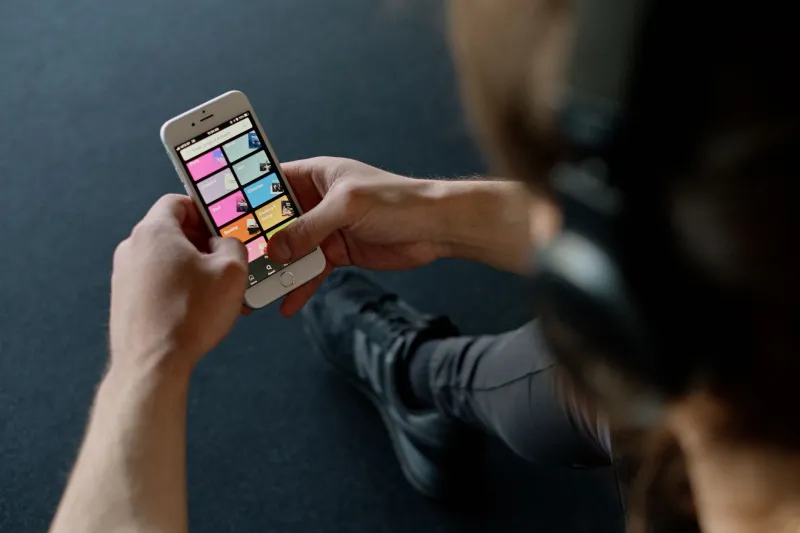
There are niche podcast fandoms, micro-genre music communities, and Twitch streamer audiences that dwarf the viewership of many cable networks, yet remain essentially invisible to anyone who doesn't already inhabit them.
"I follow about twelve different online communities pretty closely," says Trevor Huang, 26, a software developer in Seattle. "My coworkers have never heard of any of the people I consider, like, major cultural figures. And I have no idea who they're talking about half the time either. We're just living in different worlds."
The Death of the Water Cooler Moment
The water cooler moment — shorthand for the shared cultural reference that binds people across difference — was always a bit of a myth. Not everyone watched the same shows. Not everyone was included in the assumed "everyone." But it was a functional myth, a useful fiction that created connective tissue between strangers.
What's replaced it isn't one thing. It's millions of smaller versions of the same dynamic, operating in sealed containers.
"We've gone from a monoculture to a polyculture, which sounds like progress," says Dr. Simone Adeyemi, a media studies professor at the University of Michigan. "And in some ways it is — there's more space for marginalized voices, more room for niche interests to find community. But there are real costs to the loss of shared reference. Empathy, social cohesion, the ability to have a conversation with someone unlike you — all of those are harder when you have no common cultural touchstones."
The data backs this up in uncomfortable ways. A 2023 Pew Research study found that Americans across age groups report declining ability to reference pop culture with people outside their immediate social circles. Among Gen Z respondents, nearly half said they regularly encountered cultural references from peers that they had no context for — not because of age gaps, but because of community gaps.
Niche Is the New Mainstream — Sort Of
The paradox at the center of this fragmentation is that niche communities are bigger than ever, even as they remain invisible to each other.
A creator with three million devoted subscribers on YouTube isn't niche in any meaningful sense of that word. Three million people is a mid-size city. But if those three million exist entirely within a specific algorithmic bubble — gaming, true crime, cottagecore cooking, whatever — they may collectively have less cultural impact than a network TV show with half the audience that aired in 1995, simply because they share no surface area with the broader culture.
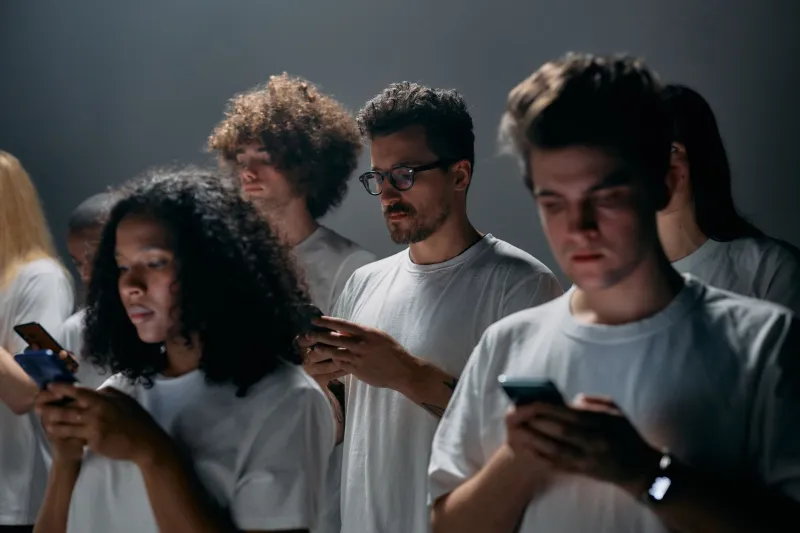
This is the paradox of the five-minute silo: communities are large, passionate, and internally vibrant. They're also sealed. The cultural energy stays inside.
"My little sister and I are four years apart and we have almost no overlapping media consumption," says Brianna Osei, 29, a marketing coordinator in Philadelphia. "Like, almost literally zero. Different creators, different platforms, different everything. We love each other but we basically live in different pop culture universes."
What We Actually Lose
It's tempting to frame fragmentation as purely neutral — different strokes for different folks, everyone finds their people, the internet enables community across geography. And there's genuine truth in that.
But something is also disappearing. The experience of being surprised by something outside your expected lane. The social glue of a shared reference. The democratic friction of mass culture — where you encountered things you didn't choose, made by people unlike you, consumed alongside strangers.
Generational bonding, in particular, takes a hit. The shared cultural vocabulary that used to connect people across age groups — the songs, the shows, the moments that transcended demographic lines — is harder to build when everyone's feed is perfectly sorted by relevance. Nostalgia, which is fundamentally about shared experience, gets harder to construct when experiences were never shared to begin with.
"Mainstream culture was imperfect and often exclusionary," says Dr. Adeyemi. "But it also created moments of genuine collective experience. We haven't figured out what replaces that yet. Or whether anything does."
Does Mainstream Still Exist?
Ask people to name the biggest cultural moment of the past year and you'll get answers so varied they barely seem to belong to the same country. A Taylor Swift tour. A specific Minecraft creator's series finale. A viral TikTok sound that generated 40 million videos. A prestige drama finale. A meme that lived and died in a single weekend.
All of these are real. All of them mattered enormously to the communities that experienced them. None of them were truly universal.
Mainstream hasn't disappeared — it's fractured into dozens of competing mainstreams, each one feeling total and complete from the inside. The question is whether that's a feature or a bug. And the answer, uncomfortably, might be both.