Rawness Is the New Filter: How 'Being Real' Online Became Its Own Kind of Act
Rawness Is the New Filter: How 'Being Real' Online Became Its Own Kind of Act
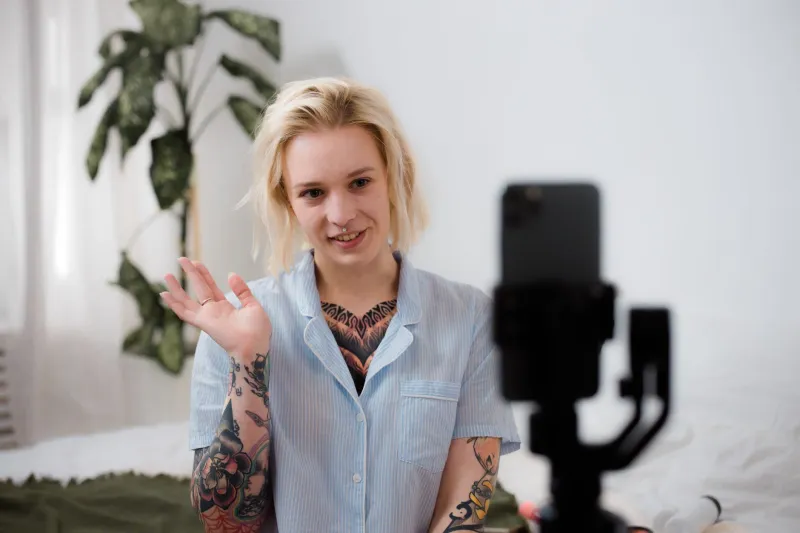
There's a specific kind of video that's been everywhere lately. No makeup. Messy room in the background. Creator talking straight into the camera, voice a little shaky, starting with something like: "I wasn't going to post this, but I think I need to."
And look — sometimes that's completely genuine. But scroll enough of them, and a pattern starts to emerge. The lighting is still soft. The audio is suspiciously clean. The emotional arc hits right around the 45-second mark. The caption says "no edits" and the comment section is flooded with "THIS is why I follow you."
At some point, authenticity stopped being a feeling and started being a format.
The Backlash That Became the Blueprint
The pivot toward "realness" online didn't happen randomly. It was a direct reaction to a specific era — the mid-2010s influencer moment, all aspirational flat lays, sponsored smoothies, and impossibly toned bodies standing in front of Santorini sunsets. Audiences eventually got tired of it. They started calling it out. They wanted something that felt human.
Platforms noticed. Creators noticed. And almost immediately, the machinery that had built the aspirational aesthetic started producing a new one: the anti-aesthetic aesthetic. Candid selfies. Crying on camera. Calling out toxic positivity. Showing the "real" apartment behind the one they'd been photographing for sponsored content.
It resonated. Hard. And because it resonated, it got replicated. And because it got replicated, it became a genre.
Now the anti-influencer is just another type of influencer, operating with its own set of unspoken rules, its own production values, its own way of packaging vulnerability for consumption.
Vulnerability as a Commodity
Here's where it gets complicated: talking openly about mental health, loneliness, failure, and self-doubt has done genuine good online. People who felt isolated found community. Stigma around therapy, anxiety, and burnout shifted in real and measurable ways, at least partly because creators were willing to put those conversations on the table.
But the same economic engine that turned beach vacations into content has turned personal struggle into content, too. Breakdowns get filmed. Grief gets a thumbnail. Anxiety becomes a series.
And when something can be monetized, the incentives around it change. You're no longer just processing something difficult — you're also, somewhere in the back of your head, thinking about whether it'll perform. Whether the caption is right. Whether this is the kind of vulnerable that gets shares or the kind that gets silence.
That's not a personal failing. It's just what happens when your emotional life lives inside a platform that runs on engagement metrics.
The Creator Caught in the Middle
Talk to enough creators — even casually, in comment sections or on podcasts where they're slightly more off-guard — and you start hearing the same thing: they don't actually know what's real anymore.
Not in a dramatic, existential way. More like a slow erosion. They started sharing honestly, it worked, they kept sharing, and somewhere along the way the sharing started to feel like a job. Now there's a version of themselves that exists online that's technically accurate but also kind of curated, even when it's trying not to be. Even the decision to not post something is a performance of restraint.
The term "oversharing" used to mean something. Now it's practically a career path. And the opposite — being private, staying quiet, keeping things offline — has become its own brand statement. Either way, you're making a choice about how you appear. There's no neutral ground left.
What Audiences Are Actually Responding To
Here's the strange part: people aren't stupid about this. Most regular viewers, even ones who aren't particularly media-literate in a formal sense, can feel when something's been produced. They might not be able to articulate exactly why a "raw" video feels slightly staged, but they sense it.
And yet they often engage anyway.
Part of that is because even a performed version of vulnerability can still land emotionally. A creator working through something on camera might be doing it in a polished way, but if the underlying feeling is real — if the thing they're talking about actually happened — there's still something there to connect with. The performance doesn't necessarily cancel out the truth underneath it.
But part of it is also just that people are used to it now. The aesthetics of authenticity have become so familiar that they function like comfort. Messy bun, ring light, unfiltered take — that combination signals "real" even when it's been engineered to.
The Platform Problem Nobody Wants to Name
None of this happens in a vacuum. The reason authenticity became a performance is that authenticity became valuable, and the reason it became valuable is that platforms rewarded it. TikTok's algorithm doesn't care if you're actually being vulnerable — it cares if the video of you being vulnerable gets watched all the way through and shared.
So creators optimize. Not always consciously. Sometimes it's just intuition built up over months of posting and watching what works. But the optimization happens, and it shapes the content, and eventually the content shapes the creator.
Instagram introduced "authentic" features like Close Friends and Notes. TikTok has leaned into lo-fi aesthetics. YouTube has been pushing unedited long-form for years. But every one of those features still lives inside a system designed to maximize time-on-platform, which means the incentive structure never actually changes. It just gets a new coat of paint.
Is Genuine Connection Still Possible?
Probably, yeah. But maybe not where everyone's been looking for it.
The spaces where connection feels least performed tend to be the smallest ones — group chats, comment threads in niche communities, Discord servers where nobody has a following to protect. Places where there's no audience to perform for, because the audience is also your friend.
The irony is that the bigger a creator gets, the harder it becomes to actually connect with anyone, even when they're trying to. Scale is the enemy of intimacy. A video watched by three million people is not a conversation — it's a broadcast. And no amount of "I read every comment" sincerity changes that math.
Maybe the question isn't whether authenticity online is real or fake. Maybe it's a category error to apply those terms to something that's always been, at its core, a form of broadcasting. People are real. Platforms are stages. And what happens on a stage — even when it's someone crying, even when it's someone saying they almost quit — is always, on some level, a show.
That doesn't mean it's worthless. It just means we should probably stop calling it something it was never quite built to be.