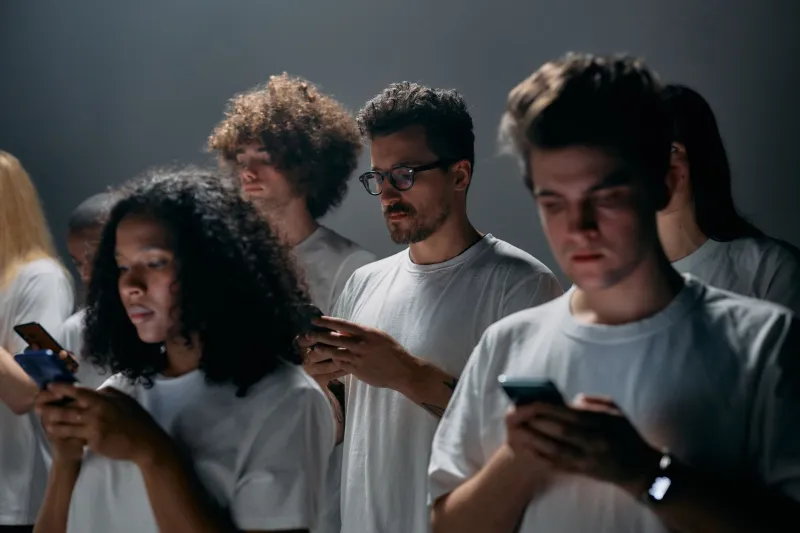
Tiny Corners of the Web Are Running the Culture Now
Photo: Harless Todd, U.S. Fish and Wildlife Service, Public domain, via Wikimedia Commons
Somewhere right now, a Discord server with 340 members is deciding what sound will define next summer. Nobody outside of it knows it exists. In six months, you'll hear that sound everywhere and have absolutely no idea where it came from.
That's not an exaggeration. That's just how the internet works in 2025.
We've spent years obsessing over the big platforms — the follower counts, the viral moments, the influencers with brand deals and stadium-sized audiences. But the actual machinery of cultural taste-making has been quietly migrating somewhere else entirely. It's moved into the cracks. The niche communities. The hyper-specific corners of the web where membership feels earned and outsiders aren't exactly welcomed with open arms.
The Mass Audience Myth
For a long time, we assumed scale equaled influence. More followers meant more power. More views meant more relevance. Platforms were built on that assumption, and a whole generation of creators optimized their entire output around chasing numbers that would make brands pay attention.
But something shifted. Partly it was algorithmic fatigue — audiences got tired of being served content designed for everyone, which increasingly felt like content designed for no one. Partly it was the homogenization effect, where every major platform started looking and sounding identical because the same optimization logic was running underneath all of them.
The people who actually cared about things — really cared, obsessively, specifically — started drifting toward smaller spaces. Subreddits dedicated to single niche topics. Discord servers built around obscure game mods or specific subgenres of electronic music. Bluesky starter packs that functioned less like follow lists and more like invitations into private intellectual clubs.
And in those spaces, something interesting happened. Influence didn't disappear. It concentrated.
How Small Became the New Loud
Here's the counterintuitive reality: a recommendation from someone inside a tight-knit niche community carries exponentially more weight than a post from an account with a million followers. Trust is the variable that mass audiences destroyed and small communities preserved.
When someone in a 500-person Discord dedicated to vintage synthesizers tells you about a new artist, you listen differently than when an algorithm serves you a sponsored post. The signal-to-noise ratio is completely different. These communities have spent months or years developing shared taste, shared language, shared standards. When something gets cosigned in that environment, it means something.
This is why so many trends feel like they arrive fully formed. The incubation happened somewhere most people weren't watching. By the time a sound, an aesthetic, a phrase, or a piece of media surfaces on a major platform, it's already been stress-tested and refined by a small audience that treated it like it mattered — because to them, it genuinely did.
Look at how certain microgenres of music have exploded in the last few years. Hyperpop didn't come from a major label strategy session. Neither did the lo-fi beats wave, or the recent resurgence of interest in early 2000s post-rock. These things fermented in small, intentional communities before they ever touched a Spotify editorial playlist.
The Architecture of Niche Power
What makes these micro-communities so effective as culture engines isn't just their passion — it's their structure. They operate with informal but consistent hierarchies. There are the people who've been around longest, who've built credibility through years of good recommendations and genuine expertise. There are the connectors, who bridge different niche communities and move ideas between them. There are the newcomers who bring outside energy without diluting the core.
It's a surprisingly sophisticated ecosystem for something that often looks, from the outside, like just a bunch of people talking about something weird.
Reddit's microcultures are particularly interesting to study here. Subreddits dedicated to extremely specific topics — a single TV show's production design, a regional variant of a food, an obscure corner of financial history — develop their own internal culture, their own in-jokes, their own standards for what counts as a worthwhile contribution. And periodically, something from those spaces escapes into the broader internet and becomes a phenomenon.
The same dynamic plays out on Bluesky, where the platform's relative smallness and the starter pack feature have allowed tightly defined communities to form quickly. Academics, artists, and niche hobbyists found each other fast and built dense, interconnected clusters. Those clusters are already generating ideas and aesthetics that will surface somewhere louder in the months ahead.
Why Brands Keep Getting This Wrong
Marketers have been trying to crack niche community influence for years, and they keep making the same mistakes. They either ignore these spaces entirely because the numbers look too small, or they try to infiltrate them in ways that immediately read as inauthentic and get rejected.
Niche communities have extremely sensitive authenticity detectors. They've been the target of enough clumsy brand plays to recognize the pattern instantly. When a company tries to speak the language of a tight-knit subculture without genuinely belonging to it, the community notices — and the backlash often travels further than the original attempt at outreach.
The brands that actually succeed in these spaces tend to do it by genuinely participating, not performing. They show up consistently, they contribute something real, and they earn trust over time the same way any individual member would. It's slow, it doesn't scale easily, and it requires actual knowledge of the community. Which is exactly why most brands don't bother.
The Next Big Thing Is Already Somewhere You've Never Been
Here's what this all means practically: if you want to understand where culture is going, stop watching what's trending on the major platforms. That's the output, not the source. The source is somewhere smaller, somewhere more specific, somewhere that probably has a barrier to entry you haven't cleared yet.
The next dominant aesthetic in visual design is being workshopped in a small Discord right now. The next breakout musical act is being passed around a niche subreddit. The next phrase that will be everywhere by fall is being used exclusively by 200 people who feel like they invented it — because in a meaningful sense, they did.
Mass platforms are where culture goes to be consumed. Niche communities are where it gets made. And the gap between those two functions is only getting wider.
The internet didn't shrink culture. It fractured it into a thousand intensely specific shards, each one burning hotter than anything the mainstream can produce. You just have to know where to look — and be willing to do the work of actually finding it.