Opting Out of the Feed: Why Gen Z Is Choosing Randomness Over Relevance
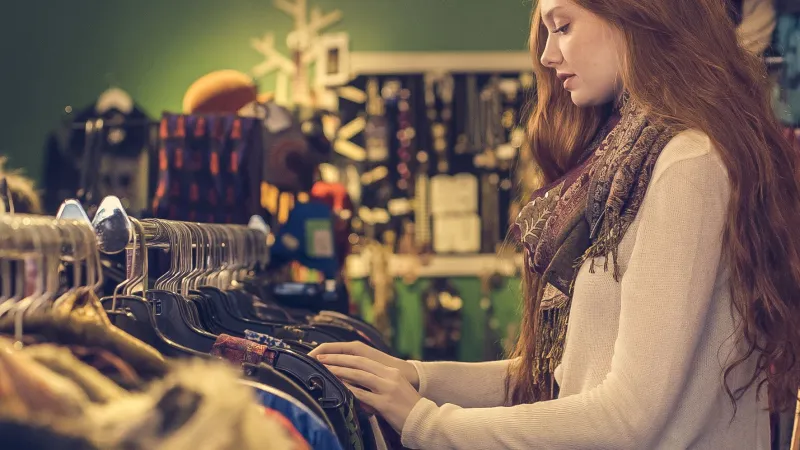
Jade Torres doesn't bring her phone into thrift stores anymore. Not because she's worried about screen time — she'll be the first to tell you she's on her phone constantly. She leaves it in the car specifically because she doesn't want to look anything up. No price checks, no Pinterest inspo boards, no scanning barcodes to see if something is worth reselling.
"When I have my phone, I'm just shopping for things the algorithm already told me I'd like," says the 22-year-old from Portland. "Without it, I actually find stuff. Weird stuff. Stuff I never would have thought to search for."
What Jade is describing has a name in academic circles — serendipitous discovery — and it's becoming one of the more unexpected cultural flashpoints of the mid-2020s. A growing slice of Gen Z is deliberately stepping outside algorithmically curated experiences, not out of tech illiteracy, but out of something closer to aesthetic exhaustion.
The Curation Ceiling
To understand why randomness is suddenly appealing, you have to understand just how thoroughly personalization has taken over daily life. Spotify knows your running pace and adjusts tempo accordingly. TikTok serves content calibrated to your micro-expressions. Amazon predicts purchases before you make them. Even your dating app has learned your "type" well enough to filter out anyone who might genuinely surprise you.
For a generation raised entirely inside these systems, the experience of genuinely not knowing what you're going to encounter next has become vanishingly rare. And rare things, as any economist will tell you, tend to accumulate value.
"There's a concept in design called 'satisficing' — choosing something that's good enough rather than optimal," says Dr. Kevin Lau, a UX researcher at a Bay Area consultancy who studies Gen Z digital behavior. "Algorithms are built to serve the optimal. But optimal isn't always what makes life interesting. Sometimes you need the random, the left-field, the thing you couldn't have predicted wanting."
Cable Is Having a Weird Renaissance
Here's a sentence that would have gotten you laughed out of a media industry panel in 2019: cable television is cool again with some young people.
Not cable as a subscription bundle. Not cable as a legacy necessity. Cable as a delivery mechanism for unfiltered randomness. Flipping through channels without a guide, landing on a documentary about competitive taxidermy at 1AM, watching a 1994 made-for-TV movie you've never heard of — this is, apparently, exactly the kind of experience a certain type of Gen Z viewer is actively seeking out.
Amber Okonkwo, 24, living in Columbus, Ohio, describes it as "TV roulette." She and her roommates have a house rule: whoever grabs the remote first picks a random channel number, and they watch whatever's on for at least 20 minutes before switching.
"It sounds stupid but it's genuinely more fun than spending an hour deciding what to watch on streaming," she says. "We've ended up watching some genuinely wild stuff. We never would have found any of it on an algorithm."
Randomness as Status Symbol
There's a social dimension to this trend that's worth unpacking, because Gen Z rarely does anything in a cultural vacuum.
Rejecting algorithmic curation has become its own form of identity signaling — the digital equivalent of wearing a band shirt for a group nobody at the party has heard of. On certain corners of TikTok and Instagram, the aesthetic of the unfiltered, the accidental, the genuinely discovered has started to carry serious cultural cachet.
The thrift store haul that includes something bizarre and inexplicable scores better than the carefully coordinated vintage finds. The Letterboxd review of an obscure 1970s Bulgarian film outperforms the hot take on the latest prestige drama. The Spotify playlist that includes a truly random genre detour feels more authentic than one that flows perfectly from start to finish.
"It's about proving your taste wasn't manufactured for you," says Dani Reeves, 21, a film student in Austin who runs a Discord server dedicated to "genuinely random" media recommendations — no algorithm-adjacent suggestions allowed. "If your whole personality can be predicted by a recommendation engine, what does that actually say about you?"
The Anti-Personalization Backlash Is Real — But Complicated
It would be easy to frame this as a straightforward tech rejection story, but it's more nuanced than that. Most Gen Z participants in this trend aren't abandoning technology. They're using it selectively, strategically opting out of specific systems while remaining deeply embedded in others.
Jade still uses Instagram. Amber is on TikTok daily. Dani has a Spotify account with thousands of saved songs. The rejection isn't of tech itself — it's of the particular flavor of control that comes with hyper-personalization. The feeling that every experience has been pre-approved for you by a system that knows you better than you know yourself.
There's something philosophically interesting in that distinction. These aren't Luddites. They're people who have become sophisticated enough about how algorithmic systems work to want to periodically escape them — not forever, just long enough to remember what it feels like to be genuinely surprised.
What This Means for the Platforms
For the recommendation-industrial complex, this is a small but notable signal. Platforms have spent billions optimizing for relevance. What they may not have accounted for is that relevance, taken to its logical extreme, starts to feel like a cage.
Some designers are already experimenting with "chaos modes" and shuffle features that deliberately surface unexpected content. Spotify's "DJ" feature gestures at this, though it's still algorithmically driven under the hood. The demand for genuine randomness — true randomness, not curated randomness — may be harder to productize than it sounds.
For now, Gen Z is solving the problem themselves. One random cable channel, one uninvestigated thrift rack, one unexplained detour at a time.