No Parking Required: How Discord Servers and Game Worlds Became America's New Hangout Spots
No Parking Required: How Discord Servers and Game Worlds Became America's New Hangout Spots
In 1989, sociologist Ray Oldenburg published a book called The Great Good Place, in which he argued that healthy communities depend on what he called "third places" — informal, accessible, low-pressure environments where people gather not out of obligation but because they genuinely want to be there. Barbershops. Diners. Front porches. The bowling alley on a Tuesday night.
Oldenburg was worried even then. The American suburb, he wrote, was systematically eliminating these spaces in favor of private homes and private cars. People were becoming more isolated without fully realizing it.
He published that book before the internet. He definitely published it before Discord.
The Mall Was Never Really About Shopping
Let's start with something that's easy to forget: the American mall, at peak cultural relevance, was not primarily a retail destination for teenagers. It was a third place. It was somewhere to go, somewhere to be seen, somewhere to exist in public without any particular agenda. The Orange Julius was incidental. The being there was the point.
That's why the death of the mall hit differently than the death of, say, the video rental store. Blockbuster closing was a convenience loss. The mall closing was a social infrastructure loss — even if most people couldn't articulate exactly what had gone missing.
What filled that gap didn't arrive with a ribbon-cutting ceremony or a press release. It arrived as a game update, a server invite, a new channel in a Discord you'd almost forgotten you'd joined.
What a Roblox World Actually Is
If you're over 30 and don't have kids, there's a decent chance you think of Roblox as a children's game. That framing misses almost everything important about it.
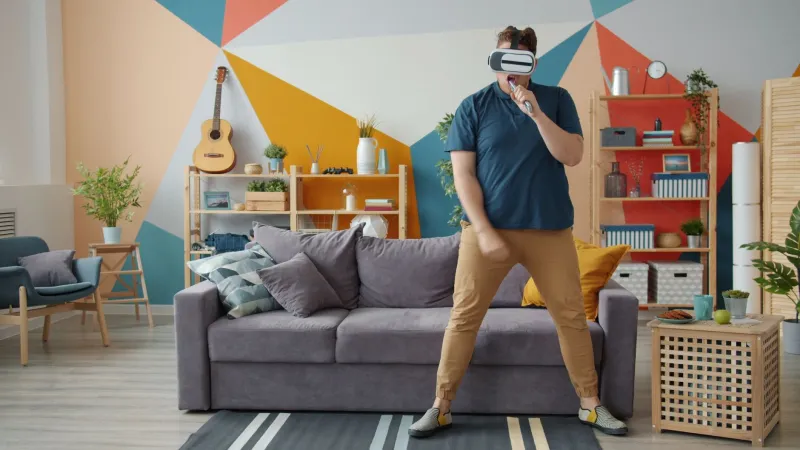
Roblox is, functionally, a platform where user-created worlds serve as persistent social spaces. Kids and teenagers aren't just playing games on it — they're hanging out in it the same way previous generations hung out at the park. They're showing up to specific servers where their friend group congregates. They're decorating virtual spaces, hosting virtual events, building ongoing social lives that have real emotional weight even if the geometry is blocky.
As of 2024, Roblox reports over 88 million daily active users. The average session isn't about completing a level. It's about being present in a space where your people are.
Minecraft operates similarly. The survival game that launched in 2011 has, over time, evolved into something closer to a social venue for many players. Private servers run by friend groups function almost exactly like a third place — a consistent location where a specific community gathers, builds shared history, and maintains ongoing relationships. The fact that the location is made of virtual blocks doesn't make the social function any less real.
Discord and the Niche Community Effect
If Roblox and Minecraft are the rec centers of the new third place landscape, Discord is something closer to a network of extremely specific clubhouses.
What makes Discord different from earlier social platforms is its architecture. It's organized around servers — essentially private or semi-private communities built around a shared interest, identity, or group. There are Discord servers for niche music genres, for specific TV shows, for regional sneaker collectors, for people managing particular health conditions, for amateur astronomers in the Pacific Northwest. The specificity is the point.
Oldenburg's original third places worked because they were local and consistent. You went to the same diner, saw the same faces, built up a shared history over time. Discord servers replicate that dynamic at the interest level rather than the geographic level. You might not know where your server members live, but you know their opinions, their humor, their history within the community. That's a real form of social knowledge, even if it doesn't come with a physical address.
Researchers at institutions including MIT and the University of Michigan have started taking these digital communities seriously as social infrastructure. A 2023 study examining online community participation found that regular engagement in structured digital spaces — including gaming communities and Discord servers — was associated with meaningful reductions in reported loneliness among young adults. The spaces are doing some of the same psychological work as their physical predecessors.
What We're Gaining (And What We're Not)
It would be easy to write this as a straightforward good-news story: young Americans are lonely, digital communities are filling the gap, problem solved. But that framing skips over some genuine complications.
Physical third places did things that are hard to replicate digitally. They created accidental encounters — you ran into your neighbor, you overheard a conversation that changed your perspective, you met someone completely outside your usual social circle because you both happened to want coffee at the same time. The serendipity of physical space is real, and most digital environments are architecturally designed against it. Discord servers self-select. Roblox friend groups are pre-filtered. You're mostly encountering people who already share your interests and aesthetics.
There's also the body question. Humans are physical creatures, and there's something that happens in shared physical space — the ambient noise, the body language, the simple fact of breathing the same air — that video calls and voice channels approximate but don't fully replicate. Developmental psychologists have raised concerns about young people whose primary social development is happening in environments that remove most of the nonverbal communication that social learning traditionally depends on.
And access isn't as equal as it looks. A Discord server is free to join, but meaningful participation requires reliable internet, a decent device, and enough unstructured time to be present in the community. Those aren't universal conditions, and the communities that form in these spaces tend to reflect the demographics of who has consistent access.
The Real Question
Here's what Oldenburg got right that still applies: third places matter not because they're fun (though they are), but because they're where the informal social fabric of a community gets woven. They're where people learn to coexist with people slightly different from themselves, where shared culture gets created, where belonging gets practiced.
The question worth asking about Discord servers and Roblox worlds isn't whether they're "real" — they clearly are, to the people in them. The question is whether they're doing the full social job that physical third places did, or whether they're doing part of it really well while leaving other parts unaddressed.
My guess is both. Which means the answer isn't to dismiss these spaces or romanticize the mall. It's to take them seriously enough to ask what they need to work better — and to keep building the physical alternatives too, because some things still require a room.