Hollywood Used to Own the Hype. The Internet Took It Back.
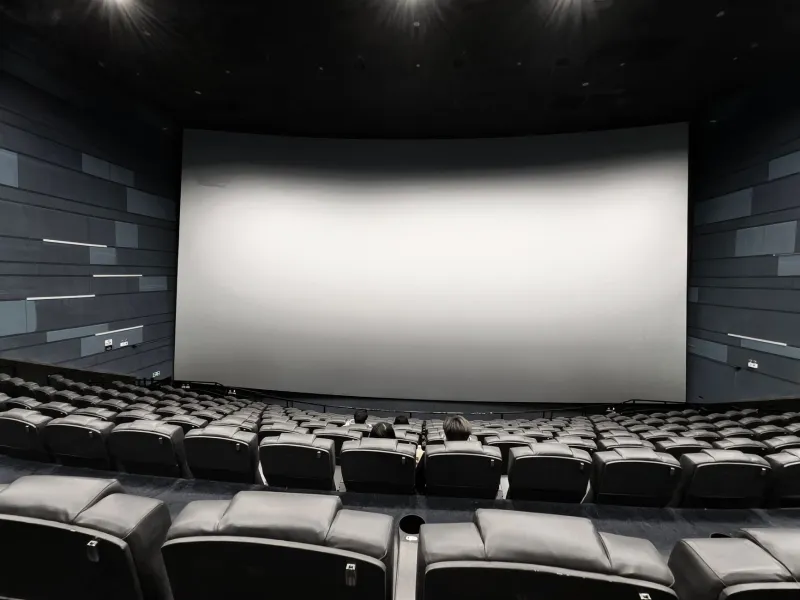
There was a time — not that long ago — when a movie trailer dropping was a genuine cultural moment. You'd be sitting in a theater, popcorn in hand, and suddenly the lights dim just a little differently, and that familiar deep voice starts narrating something that makes your spine do a weird thing. Two minutes later, you've already decided you're seeing that movie opening weekend. That was the deal. Studios built it, you showed up, and everybody went home satisfied.
That deal is basically dead now.
Not because movies are worse. Not because trailers got bad (though some definitely did). It's because the internet fundamentally rewired who gets to control the hype — and Hollywood is still acting like it didn't notice.
The Trailer Used to Be an Event
Let's give credit where it's due. At its peak, the movie trailer was one of the most sophisticated pieces of short-form storytelling in American media. Studios employed teams of editors, composers, and marketing psychologists whose entire job was to compress a two-hour emotional arc into 150 seconds without giving anything meaningful away. That's genuinely hard. The theatrical trailer for Inception in 2010 is still taught in film schools. The first Avengers trailer broke streaming records when it dropped. People watched the Star Wars: The Force Awakens teaser dozens of times just to analyze a single shot of a lightsaber.
Those trailers didn't just market films — they were entertainment. Appointment viewing. The kind of thing you texted your friends about at 11pm on a Tuesday because someone on Twitter said it just dropped.
The machinery behind that was tight, controlled, and expensive. And it worked because studios owned the pipeline from creation to distribution. They decided when you saw it, where you saw it, and how much of it you got.
Then the pipeline cracked.
Leaked, Clipped, and Crowdsourced Before the Ink Dries
Here's the thing about the modern internet: it doesn't wait for permission. A production crew starts filming on location in Atlanta, and by the time craft services has set up lunch, someone's already posted blurry set photos to Reddit. A rough cut of a trailer gets shared in a test screening, and within 48 hours a fan has uploaded it to YouTube with 200,000 views before the studio's legal team even drafts the takedown notice.
But it's not just leaks. It's the reaction ecosystem that really broke the old model.
TikTok changed everything. When a trailer drops now, the actual two-minute video is almost secondary to the 40,000 reaction videos, frame-by-frame breakdowns, and fan theories that flood the platform within hours. A 19-year-old in Ohio with 300 followers can post a 30-second clip of herself losing her mind over a single blink-and-you-miss-it Easter egg — and that clip will outperform the studio's official promotional push by a factor of ten. The algorithm doesn't care about marketing budgets. It cares about engagement.
Fan-cut trailers are their own genre now. Before The Batman dropped its official trailer in 2021, there were already dozens of fan-assembled edits using leaked set photos, reused audio from other films, and original music that honestly slapped harder than some official cuts. Studios found themselves in the bizarre position of competing with their own audience for attention around their own movie.
The New Hype Wars Don't Have a Rulebook
So who's actually winning this thing? It's complicated.
Some studios have gotten smart about leaning into the chaos. Marvel — love them or hate them — figured out early that the best move was to treat every piece of leaked information as a stealth marketing opportunity. Let the subreddits theorize. Let the TikTok detectives find the hidden logo in the background of a set photo. The conversation is the campaign now. By the time the official trailer drops, the audience is already primed and invested. You're not introducing them to the movie; you're confirming what they already suspected.
Other studios are still fighting the old war with old weapons. They're dropping polished, expensive trailers in moments that feel manufactured — a Sunday night during a big awards show, a carefully timed midnight release — and then watching those trailers get immediately dissected, memed, and overshadowed by whatever organic moment the internet decides to care about that week.
The uncomfortable truth is that cultural hype in 2024 is decentralized by default. There's no single moment of ignition anymore. There's a slow burn of content — posts, clips, leaks, reactions, counter-reactions — that builds or doesn't build based on factors that no marketing team can fully engineer.
What This Means for the Movies Themselves
Here's where it gets genuinely interesting: the collapse of studio control over hype hasn't made audiences less excited about movies. If anything, the most talked-about films of the last few years have generated more pre-release conversation than anything from the trailer's golden age. The difference is that the conversation is messier, more democratic, and way harder to spin.
That's a problem for studios when a movie is bad — because the internet will know before opening weekend, and no amount of carefully cut trailer magic will save it. But it's an opportunity for films that are actually good, or weird, or interesting in ways that formal marketing can't quite capture. Word-of-mouth has always been powerful. Now it moves at the speed of a push notification.
What's dying isn't the excitement around movies. It's the illusion that studios can manufacture excitement on command. The two-minute emotional journey still matters — but it's one input among hundreds now, and it has to earn its place in the feed like everything else.
The Trailer Isn't Dead. It Just Has Competition.
Look, the well-crafted trailer isn't going anywhere. A genuinely great one still hits differently. When it works — when the music sync is perfect and the edit gives you chills and the final title card lands just right — it still does something that a fan-cut TikTok can't fully replicate. There's craft there. Intention. A specific kind of emotional intelligence that the best trailer editors have spent careers developing.
But the context around it has changed completely. The trailer used to be the beginning of the conversation. Now it's just one voice in a conversation that started weeks ago and will keep going long after the movie leaves theaters.
For studios, the lesson is probably this: stop trying to control the hype machine and start learning to ride it. The audience isn't the enemy of good marketing — they're the most powerful marketing force in existence. The brands and studios that figure out how to work with that energy instead of against it are the ones that will actually win the new hype wars.
Everybody else is just making expensive content for an audience that's already moved on to the next thing.