After Hours, On Fire: How the 11PM–3AM Window Became America's Most Powerful Cultural Moment
The Lights Go Down, the Feed Comes Alive
There's a version of American entertainment that runs on schedules — primetime slots, morning show debuts, Friday release windows. That version is increasingly irrelevant.
Because somewhere around 11PM, after the daytime noise fades and the algorithm's rush-hour traffic thins out, something different starts happening online. Comment sections get stranger and more honest. Niche communities get louder. The people who actually move culture — not the PR teams, not the playlist curators, not the brand managers — start posting.
This isn't a coincidence. It's a window. And the creators, musicians, and brands who've figured out how to use it are operating at a completely different level than everyone else.
Why Late Night Is Now Prime Time
For decades, "prime time" meant 8–11PM — the hours when broadcast networks captured the largest possible audience and advertisers paid accordingly. That logic made sense when TV was the dominant medium and attention was passive.
But social media doesn't work like broadcast TV. Engagement isn't just about volume — it's about intensity. And the people scrolling at 1AM are a fundamentally different audience than the ones half-watching something at 7PM while making dinner.
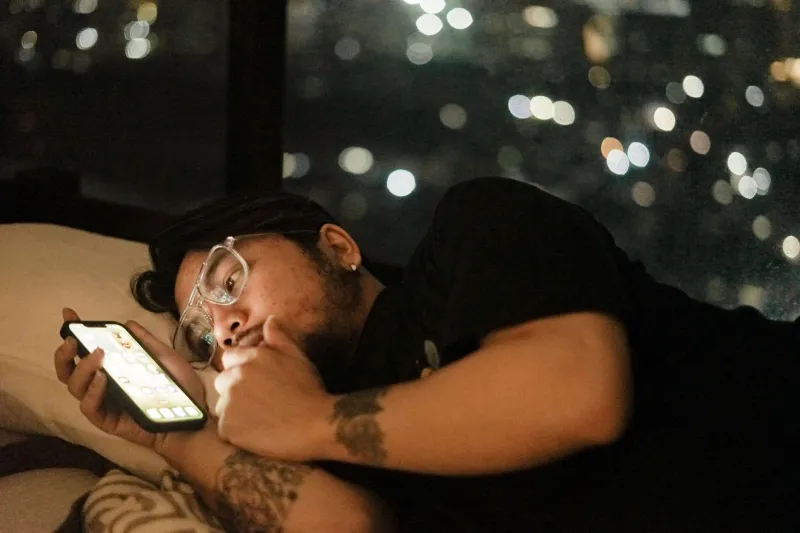
Late-night digital users are awake by choice. They're not multitasking. They're in bed, in the dark, fully locked into their screens. Psychologists call this "revenge bedtime procrastination" — the phenomenon where people who feel they had no control over their day deliberately stay up late to reclaim personal time. It's widespread across the US, and it's created an audience that is more emotionally open, more likely to engage, and significantly more likely to share something that hits them the right way.
That's the kind of audience that makes things go viral.
The Creators Who Figured It Out
Ask any creator with a genuinely passionate following — not just big numbers, but real engagement — and a lot of them will tell you the same thing: their best-performing content dropped late.
This isn't accidental. There's a growing community of digital-native creators who deliberately schedule posts between 11PM and 2AM, specifically to sidestep the algorithmic competition that peaks during daytime hours. When fewer posts are competing for attention, your content has more room to breathe. Early engagement in those quiet hours can signal to platforms that something is worth amplifying — and by the time the morning scroll begins, you're already trending.
Beyond the mechanics, there's a cultural reason it works. Late-night audiences are tribal. They feel like they discovered something. A song that hits you at 1AM while you're lying in the dark feels more personal than one you heard on a Spotify editorial playlist at noon. That feeling of discovery — of being in on something before everyone else — is exactly what drives sharing behavior.
Music's Midnight Moment
The music industry has been quietly running experiments in this space for years. Independent artists, in particular, have learned that a surprise drop at midnight can generate a completely different kind of buzz than a traditional release-day rollout.
The logic tracks: streaming platforms update their algorithmic playlists overnight. A song that accumulates streams and saves in those first few hours gets a significant early boost. But more importantly, it gets heard by night-owl listeners who are actively seeking out new music — not just passively receiving recommendations.
Some of the most culturally significant music moments of the past few years happened in this window. Tracks that blew up on TikTok often did so because someone posted a clip late at night, it gained traction with an engaged late-night audience, and by morning it was already a thing. The algorithm didn't create that moment — the 2AM crowd did.
Brands Are Catching On (Some Faster Than Others)
For most brands, social media strategy still runs on business hours. Content gets scheduled during the week, reviewed by committees, and posted when the marketing team is at their desks. The result is a feed full of polished, forgettable content competing with every other brand doing the exact same thing.
But a handful of forward-thinking brands — particularly in fashion, gaming, and music — have started playing a different game. Surprise drops, limited releases, and "for the real ones" moments deliberately timed for late-night audiences have become a legitimate strategy.
The appeal is obvious: late-night audiences feel like insiders. When a brand drops something at midnight with minimal fanfare, the people who catch it feel chosen. That feeling translates into loyalty, advocacy, and the kind of organic word-of-mouth that no paid campaign can replicate.
Gaming companies have understood this for a while — patch notes, surprise announcements, and community events often drop late specifically because the gaming audience is predominantly nocturnal. The culture around drops and reveals in gaming has since leaked into streetwear, music, and beyond.
The Psychology of the Dark Scroll
There's something worth sitting with here about what late-night scrolling actually reveals about us.
Daytime consumption is often performative — we share things to signal taste, to participate in conversations, to stay current. Late-night consumption is different. It's private. It's personal. The things that hit us at 1AM are the things we actually care about, not the things we feel like we're supposed to care about.
This is why the content that breaks through in the late-night window tends to be more raw, more niche, and more emotionally resonant than daytime viral hits. Memes get weirder. Music gets more vulnerable. Communities get more honest. The gatekeepers — the tastemakers who curate what's "acceptable" to like — are asleep.
What's left is something closer to actual culture.
What This Means for Everyone Else
If you're a creator still optimizing entirely for daytime posting windows, you're leaving something real on the table — not just engagement metrics, but actual connection with the audience that drives cultural momentum.
If you're a brand still thinking in terms of business-hours social media, the communities forming at midnight are moving on without you.
And if you're just a person who's noticed that the most interesting corners of the internet seem to come alive when you probably should be asleep — yeah. You're not imagining it. That's where the real stuff lives now.
Primetime didn't disappear. It just moved. And it's running about four hours later than anyone in a boardroom wants to admit.