Sleeping In Is the New Hustle: How Rest Became America's Hottest Status Symbol
Sleeping In Is the New Hustle: How Rest Became America's Hottest Status Symbol
There was a moment — not that long ago — when telling someone you only slept four hours was basically a power move. CEOs said it in interviews. Startup founders wore it like a badge. College students posted it on Twitter like a trophy. The less you slept, the harder you were grinding, and grinding was the whole point.
That era isn't totally dead. But it's wobbling. And the thing that's pushing it over? Sleep itself.
The Grind Aesthetic Had a Great Run
Hustle culture didn't come out of nowhere. It was baked into the American identity long before Instagram made it aesthetic. The Puritan work ethic, the immigrant story, the bootstrap mythology — all of it pointed in the same direction: rest is weakness, output is virtue, and your worth is measured in what you produce.
By the 2010s, that energy had gone fully viral. "Rise and grind" wasn't just a motivational quote — it was a content genre. Five AM wake-up routines got millions of views. Sleep deprivation became a weird flex in Silicon Valley. And anyone who admitted to needing a full night's rest risked looking soft in a culture that equated exhaustion with ambition.
The problem? The human body never actually agreed to any of this.
Something Shifted
Around the early 2020s, cracks started appearing. Athletes began talking openly about sleep like it was a competitive advantage — not a concession. LeBron James had already been publicly logging eight to ten hours a night for years. Roger Federer famously claimed twelve. Suddenly, elite performance and serious rest weren't opposites anymore.
Then came the wellness tech wave. Devices like the Oura Ring and Whoop band started turning sleep data into something you could actually show off. Your REM cycles, your recovery score, your heart rate variability — all of it quantified, tracked, and yes, shareable. Sleep stopped being invisible. It got a dashboard.
And once something has a dashboard, it becomes a flex.
Gen Z Didn't Get the Grind Memo
Here's where it gets interesting. Gen Z — the generation that was supposed to out-hustle everyone — largely looked at burnout culture and said: hard pass.
That's not laziness. It's a different calculation. This is the generation that grew up watching millennials grind themselves into anxiety disorders and student debt with nothing to show for it. They watched hustle culture get memed into oblivion. They saw "girl boss" go from empowerment to punchline in about four years flat.
So instead of performing exhaustion, a lot of Gen Z creators started performing rest. TikTok is full of "soft life" content — slow mornings, no-alarm wake-ups, bedtime routines filmed like rituals. It's not laziness content. It's intentional rest content. And it gets millions of views because it's hitting something real.
The cultural signal is clear: choosing sleep is now an act of resistance, not surrender.
The Wellness Tech Angle Is Impossible to Ignore
None of this happened in a vacuum. The sleep economy is enormous and getting bigger. The global sleep aid market is projected to blow past $100 billion in the next few years, and American consumers are leading the charge. We're buying weighted blankets, mouth tape (yes, really), smart mattresses, sleep-tracking wearables, magnesium supplements, and $60 pillow sprays without blinking.
Apps like Calm and Headspace built entire empires on the idea that Americans need help winding down. Eight Sleep's temperature-controlled mattress costs as much as a used car and has a waitlist. The Oura Ring has celebrity co-signs. These aren't fringe products — they're mainstream, and they're marketed directly to the same ambitious, achievement-oriented people who used to brag about pulling all-nighters.
The message the industry is selling is simple: optimized sleep is a performance tool. You don't rest instead of winning. You rest so that you can win harder. It reframes the whole thing in language that hustle culture can actually accept.
The Social Media Performance of Recovery
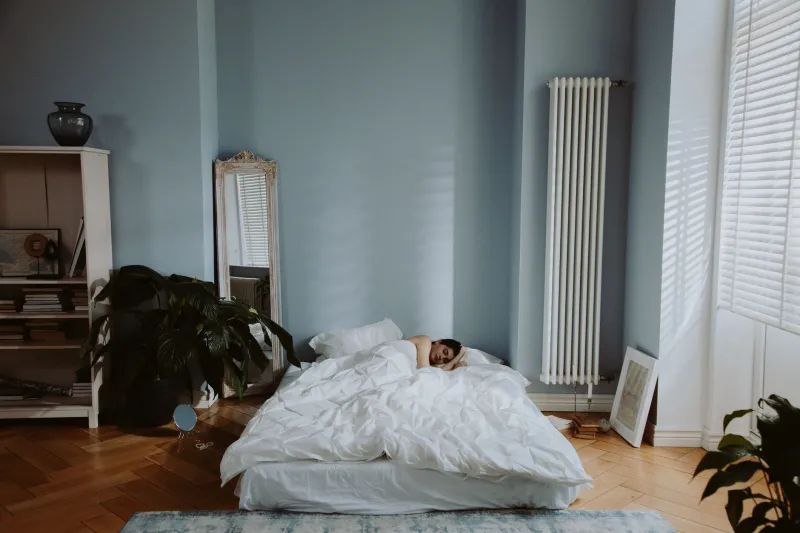
What's wild is how thoroughly this has flipped the content script. The aspirational lifestyle post used to look like a 5 AM gym selfie, a black coffee, and a laptop open in a dark room. Now it might just as easily be a linen-sheeted bed, a sunrise through clean curtains, and a caption about protecting your peace.
Sleep content is having a genuine cultural moment. "That Girl" routines on TikTok almost always include a solid wind-down ritual. Wellness influencers post their Oura Ring scores like athletes post their stats. There are entire YouTube channels — with real subscriber counts — dedicated to sleep hygiene, sleep sounds, and bedtime routines for adults.
This is what happens when rest becomes identity. It gets performed. It gets aestheticized. It gets optimized. And then it gets posted.
Is It Actually a Shift, or Just Another Aesthetic?
Fair question. Because there's a version of this that's still just hustle culture with a lavender pillow spray. If you're sleeping eight hours so you can be a more efficient machine, are you actually rejecting productivity worship — or just upgrading it?
Probably some of both, honestly. Cultural shifts rarely arrive clean. The "sleep as status" moment is real, but it's tangled up with capitalism in the usual ways. The companies selling you rest are still selling you something. The influencers performing their sleep routines are still performing. The Oura Ring is still a status object.
But underneath all that noise, something genuine does seem to be moving. More Americans — especially younger ones — are genuinely questioning whether the exhaustion was ever worth it. Whether the grind actually delivered. Whether burning out in your twenties and thirties is a price worth paying for a version of success that keeps moving the goalposts.
That questioning is new. Or at least, it's louder than it's been in a long time.
The New Flex Is Knowing When to Stop
Maybe the most interesting thing about this whole shift is what it says about where American ambition is headed. For a long time, the flex was how much you could take on. How little you needed. How long you could push.
Now, for a growing chunk of the country, the flex is knowing your limits — and choosing them anyway. Logging off. Going to bed. Saying no to the 11 PM Slack message. Treating rest not as a failure of willpower but as a deliberate, intelligent choice.
That's a different kind of strength than hustle culture ever recognized. And whether it's a full cultural revolution or just a vibe shift that'll fade in two years, it's at least worth noting: America is finally starting to sleep on sleep a little less.
And honestly? That might be the most well-rested thing we've done in decades.