Doing Nothing Is the New Doing Everything: America's Quiet Revolt Against the Always-On Life
Doing Nothing Is the New Doing Everything: America's Quiet Revolt Against the Always-On Life
Something strange is happening in a country that built an entire economy around keeping people entertained every second of the day — people are choosing silence. Not meditation apps, not white noise playlists, not lo-fi study beats. Just nothing. And it might be the most culturally significant thing happening right now.
We're not talking about a wellness trend with a catchy brand name. No one's selling this. There's no app, no subscription tier, no influencer partnership. That's actually the point.
The Gap Between Songs Used to Scare Us
Think about how you used to treat silence. The car ride where you immediately plugged in your phone before the engine even turned over. The elevator where you stared at your screen because standing in quiet felt somehow wrong. The apartment at night where you'd turn on the TV not to watch anything, just to fill the room with sound.
America has spent the better part of two decades treating silence like a problem to be solved. The entertainment industry — streaming platforms, podcasting networks, social media apps — built entire empires on that anxiety. They didn't create the fear of quiet, but they sure knew how to monetize it.
Now some people are just... stopping.
Not because they've hit burnout (though plenty have). Not because they're doing a 30-day digital detox challenge for clout. They're stopping because they've started to realize that filling every moment with content is its own kind of exhaustion — and that the silence they were running from might actually be something worth sitting with.
Gen Z Is Doing It Differently Than You'd Expect
Here's what's interesting: this isn't coming primarily from older Millennials who remember life before smartphones. Gen Z — the generation practically born into the algorithm — is increasingly vocal about reclaiming empty time. Not as a productivity hack. Not as a mental health strategy. As an identity statement.
There's a growing contingent of young Americans who see choosing unstructured silence as a form of resistance. When every platform is engineered to capture your attention, the act of withholding it becomes genuinely radical. Logging off not to recharge for more scrolling, but as a deliberate rejection of the idea that your time only has value when something is being consumed.
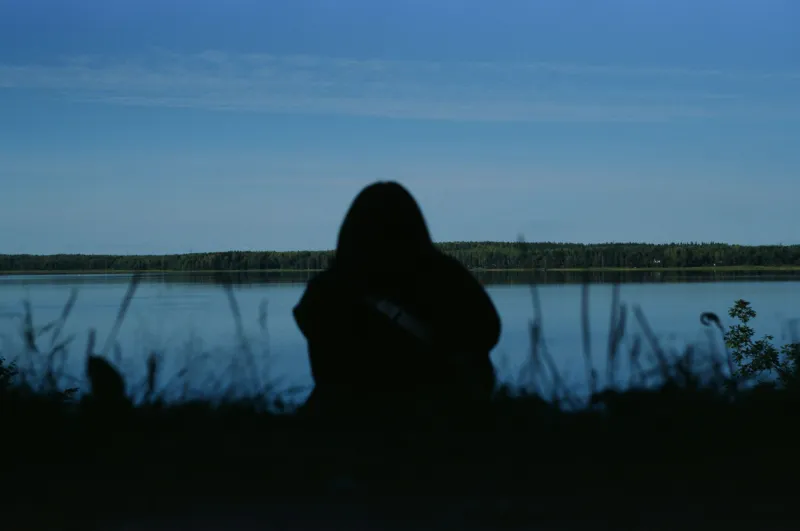
You see it in the conversations happening in certain corners of the internet — which, yes, is a little ironic. People talking online about how they spent an afternoon sitting on their porch doing absolutely nothing. No podcast in their ears. No playlist running. Just the neighborhood sounds, their own thoughts, and the weird discomfort that comes with realizing how unfamiliar that feels.
That discomfort? That's the whole thing. That's what people are chasing.
What the Entertainment Industry Doesn't Want to Admit
The always-on entertainment economy runs on a very specific assumption: that human beings have an infinite appetite for content, and that the only limit is access. Build better recommendations, make the interface frictionless enough, and people will keep watching, listening, scrolling forever.
But appetite isn't infinite. And friction — the pause, the gap, the moment of nothing between one thing and the next — turns out to have value that no algorithm can replicate.
When someone chooses silence, they're not just skipping a song. They're opting out of the entire feedback loop that tells platforms what to show them next. They're generating zero data. They're invisible to the machine. And in a media landscape where your attention is the actual product being sold, invisibility is the only real power a consumer has.
The entertainment industry is quietly paying attention to this. Not because they want to celebrate it, but because they're trying to figure out how to convert it back into engagement. Expect to see more "mindfulness" features, more "calm" modes, more products designed to simulate the feeling of doing nothing while still technically keeping you on-platform. They'll try to sell you the aesthetic of silence without giving you the real thing.
The Silence Isn't Empty
Here's what people who've actually tried this report: it's uncomfortable at first, and then it isn't.
The first twenty minutes of genuinely doing nothing — not meditating with guided breathing, not journaling, not even staring at the sky with a purpose — feel almost physically itchy. Your hand reaches for your phone. Your brain starts generating to-do lists. You think about all the content you could be consuming right now.
And then, somewhere around the thirty-minute mark, something shifts.
Your thoughts start to move differently. Not faster, not more productively — just more like yours. Less like a response to something you just watched or heard, and more like something that originated in you. People describe it as remembering how their own mind sounds. Which is a strange thing to have to rediscover, but here we are.
This is what no entertainment platform can give you, because it's specifically the absence of their product. It's the mental space that opens up when nothing is piping information into your head. And it turns out that space is where a lot of people are finding something they didn't know they'd lost.
What This Means Going Forward
Let's be real — this isn't going to topple the streaming industry. People aren't going to collectively decide to sit in silence instead of watching their shows. The attention economy isn't collapsing.
But something is shifting at the cultural edges, and those edges have a way of moving toward the center eventually.
When the most countercultural thing a 24-year-old can do on a Saturday afternoon is sit on their stoop with nothing playing, that says something about where we've landed as a society. It says the pendulum has swung so far toward constant stimulation that stillness itself has become a statement.
The entertainment industry's real challenge isn't competition from another platform. It's the growing number of people who are starting to question whether the next thing they queue up is actually something they want — or just something to fill the silence they haven't learned to sit with yet.
Maybe the most interesting content story of the next few years isn't about what people are watching. It's about what they're choosing not to.